Wobbly Ceiling Fan? Causes and When to Call an Electrician
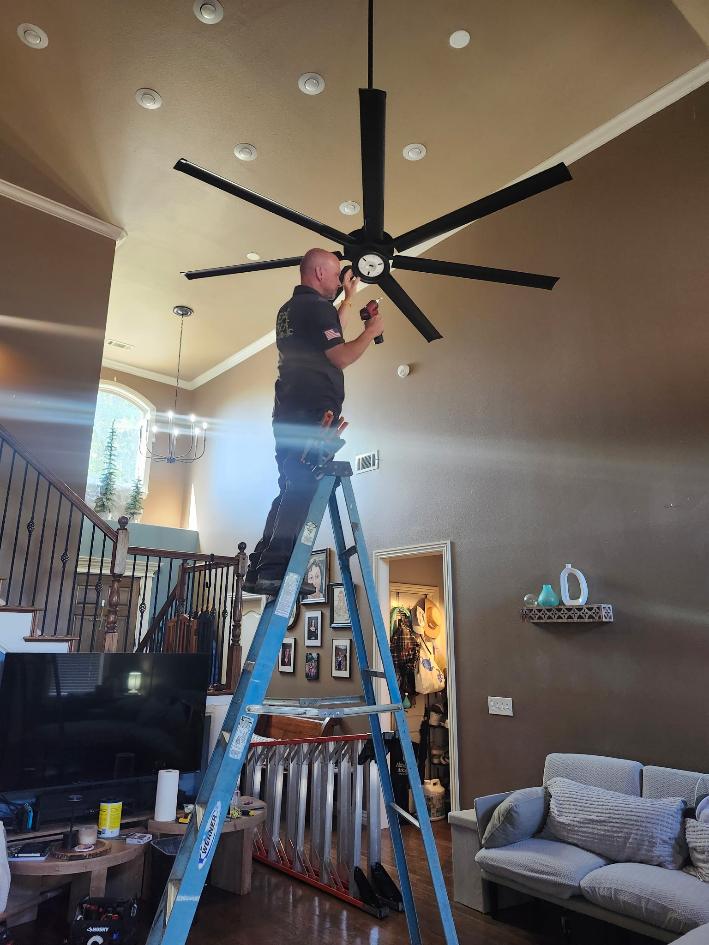
A wobbly ceiling fan can have a balance problem, loose hardware, or an insecure mounting connection. The movement alone does not tell you which repair it needs. Turn the fan off if the shaking is new, pronounced, or getting worse, and arrange an inspection before using it again.
For Northwest Arkansas homeowners, the useful first step is to note what changed and describe it to an electrician. You do not need to climb a ladder, open the ceiling canopy, or touch wiring to gather helpful information.
What causes a wobbly ceiling fan?
A fan is a rotating assembly supported above the room. A problem with either the rotating parts or their support can show up as movement. These possibilities need different solutions:
- Blade balance: An uneven rotating assembly may need the manufacturer’s balancing procedure.
- Loose assembly hardware: Connections in the fan can require inspection against the installation manual.
- Mounting trouble: The attachment to the ceiling may need correction before any balancing work makes sense.
Hunter’s fan wobble guidance identifies hardware checks and a balancing kit as troubleshooting steps. Those instructions are specific to the product. For a wobbly ceiling fan with an unknown installation history, ask a professional to evaluate the support before assuming a small weight will solve it.
When should you stop using the fan?
Stop a wobbly ceiling fan if the ceiling attachment appears to move, a part looks loose, or the shaking suddenly changes. Keep people clear beneath it. Do not hold the housing or try to steady a spinning blade with your hand.
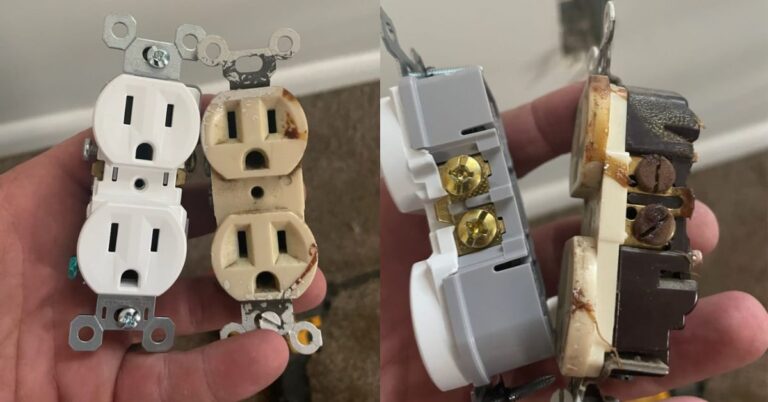
Electrical symptoms need separate attention. The Electrical Safety Foundation’s warning signs include burning odors, buzzing, discolored devices, and flickering lights. If these accompany the movement, leave the fan off and contact a qualified electrician. For smoke or an active fire, leave the home and call 911.
There is no useful universal rule that a certain amount of movement is safe for every model. A wobbly ceiling fan cannot be cleared for use simply because it still runs or because its light works.
What can you safely observe from the floor?
With the fan off, write down what you already noticed. Do not restart an unstable fan just to collect more evidence. Useful details include:
- Whether the movement began after installation, cleaning, or another change.
- Whether it previously occurred at one speed or several speeds.
- Whether you heard clicking, scraping, or an electrical buzzing sound.
- Whether the ceiling cover appeared to move along with the fan.
- Whether the light or wall control behaved differently at the same time.
Find the brand and model in your purchase records or owner’s manual if available. Tell the service team about high ceilings, stairs, or furniture below the fixture so they can plan access. A short description of a wobbly ceiling fan is more useful than guessing which part has failed.
Will a balancing kit fix the problem?
A balancing kit may help when blade balance is the actual cause. It does not repair inadequate ceiling support. Hunter’s mounting guidance specifies appropriate attachment to a ceiling fan-rated box or suitable building structure, using the specified hardware.
For a wobbly ceiling fan, follow the exact model’s manual and leave mounting, wiring, or uncertain assembly issues to an electrician. Do not add improvised weights, bend blade brackets, or install random replacement hardware. Changing one part without identifying the cause can leave the original problem unresolved.
Should you repair or replace a wobbly ceiling fan?
Ask for the cause to be identified before choosing a replacement. A repair may be reasonable when the fan is otherwise serviceable and the correct parts are available. Replacement may be the better option when damage, unavailable parts, or repeated problems make repair impractical.
Replacing a wobbly ceiling fan also requires checking its support. A new fixture will not correct an unsuitable mounting arrangement by itself. Ask whether the estimate includes evaluating the existing installation, any necessary support correction, and checking operation afterward.
Keep the model information and warranty paperwork handy. Before approving work, clarify whether the recommendation concerns the fan itself, the installation, or both. That distinction helps you compare repair and replacement estimates fairly.
Get help with a wobbly ceiling fan in Northwest Arkansas
Epic Electric provides residential electrical troubleshooting and repairs throughout Northwest Arkansas, including Bentonville, Rogers, Springdale, and Fayetteville. If a wobbly ceiling fan is making you question whether it is safe to use, call (479) 552-5366 to discuss the symptoms and request service.