When a Tripping Breaker Is Not Just a Tripping Breaker: What a Failing Panel Looks Like From the Inside
Failing Electrical Panel, When a breaker trips, most homeowners do the same thing: walk to the panel, flip it back on, and move on with their day. If it holds, the problem feels solved. If it trips again a week later, they flip it again. This can go on for months before anyone thinks much of it.
Shannon Hadley, the owner of Epic Electric and a licensed electrician with nearly three decades of experience across Northwest Arkansas, sees the end of that pattern regularly. By the time he gets the call, the breaker that had been tripping for months is often pointing to something the homeowner could not see, because it was happening inside a closed panel.
Resetting a tripping breaker does not address what caused it to trip. The underlying issue stays until someone opens the panel and looks. Here is what that actually involves, and how to recognize when a tripping breaker is a sign of something more serious.
What a breaker is actually doing when it trips
A circuit breaker has one job: to cut power when a circuit draws more current than it can safely handle. That is a feature, not a malfunction. A breaker that trips is doing exactly what it is supposed to do, protecting the wiring from overheating.
The question that matters is why it is tripping. Sometimes the cause is a genuinely overloaded circuit, too many things drawing power at once, and redistributing the load or adding a dedicated circuit fixes it. But a breaker that trips frequently without a clear reason often points to the breaker itself failing, not a one-time overload. Telling the difference is what an electrician is actually there to do.
What a failing panel looks like on the inside
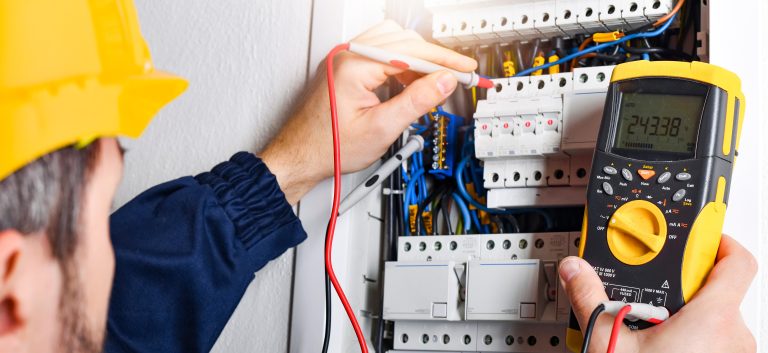
The most serious panel problems are invisible with the cover on. When Shannon opens a panel that has been giving a homeowner trouble, he is looking for a specific set of warning signs.
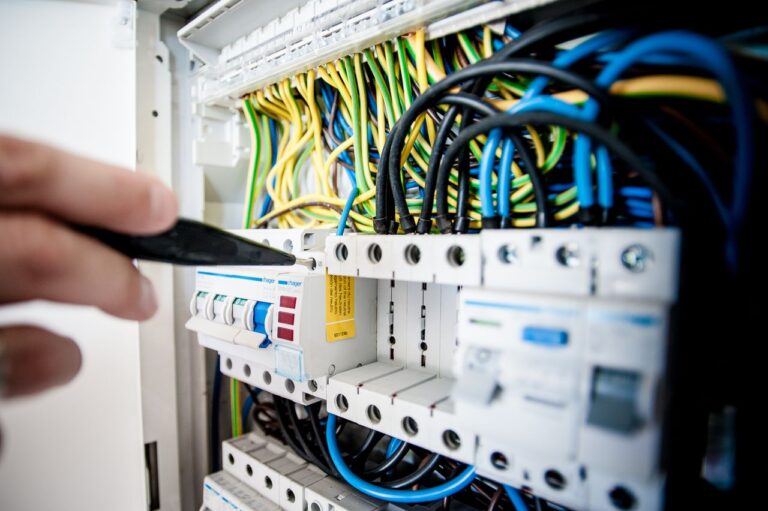
Heat damage is the most telling. A healthy electrical panel should be cool to the touch. Inside, the connection points where breakers meet the bus bar should look clean and undamaged. In a failing panel, those points show discoloration, browning, scorch marks, or in serious cases melted plastic. That damage is the physical record of heat building up over time at a connection that was not holding the way it should.
Shannon describes the process from his years in the field. “Breakers heat up, they cool down, heat up and cool down, and then over time they get a little air gap in there, and that starts to spark.” That sparking is called arcing, and it is electricity jumping across a small gap and generating intense heat each time it does. It is one of the conditions that leads to electrical fires.
Arcing is sometimes audible. Buzzing, hissing, or crackling sounds coming from a breaker box are signs of arcing and should be treated as urgent. A healthy panel is silent.
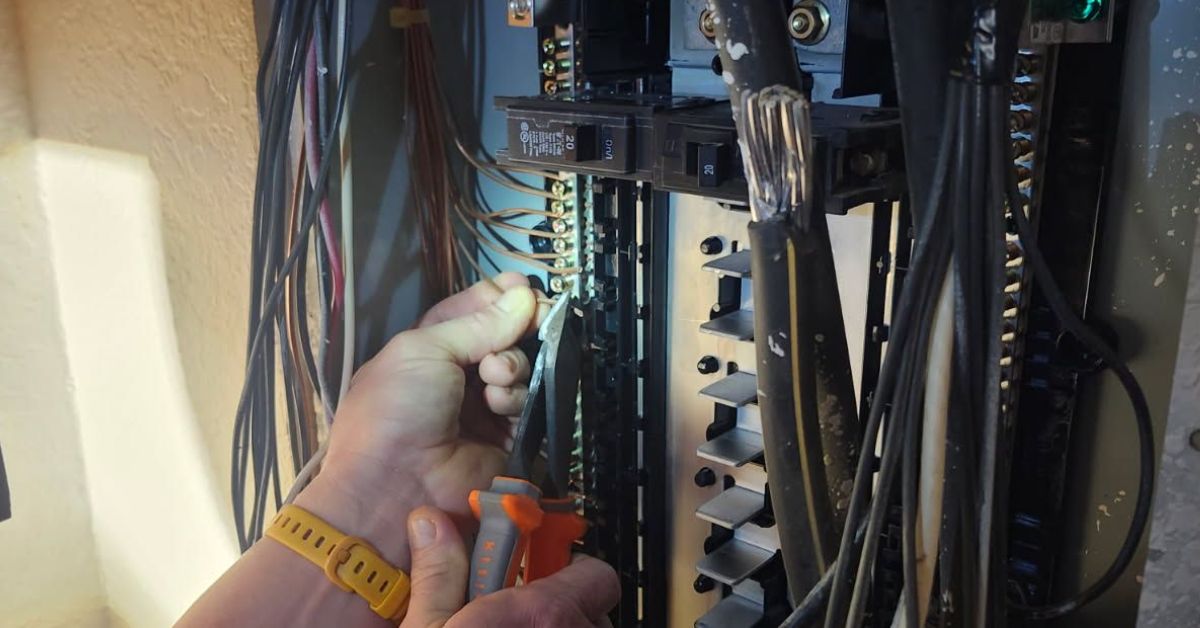
Loose connections are the other thing Shannon checks throughout the panel. Over years of heating and cooling cycles, the screws and clamps that secure wires can loosen. A loose connection creates resistance, resistance creates heat, and heat loosens the connection further. The problem compounds over time, which is why a panel that seemed fine for two decades can start having multiple issues in a short window.
Age is a factor, and most homeowners do not know their panel’s
Electrical panels do not last indefinitely. The typical lifespan of a residential panel is 25 to 40 years, and breakers inside typically last 20 to 30 years under normal conditions. Heat shortens both. A panel in a hot Northwest Arkansas garage or on a sun-exposed exterior wall ages faster than one in a climate-controlled space.
Shannon puts the working numbers plainly: figure roughly 25 years out of a set of breakers and about 30 for the box itself, less if it has been running in heat. Most homeowners have no idea how old their panel is, and even fewer think to check before there is a visible symptom.
Most of the panel calls Epic Electric gets were preventable. The homeowner had noticed something small, a breaker that tripped once or twice, a faint smell, a panel that felt slightly warm, and put it aside. Shannon’s view is consistent: the right time to look at a panel is before it becomes an emergency, not after.
Warning signs worth paying attention to
You do not need to open the panel yourself to know something warrants a call. The signs are usually noticeable from the living side of the wall:
- A breaker that trips repeatedly, especially one that will not stay reset after being flipped.
- Any warmth at the panel cover or the wall around it. The panel should be cool to the touch.
- Buzzing, crackling, or hissing sounds from the breaker box.
- A burning smell near the panel or an outlet.
- Lights that flicker or dim when a large appliance kicks on.
- Scorch marks or discoloration on or around the panel or outlets.
A burning smell, visible scorching, or warmth at the panel are not inconveniences to monitor. These are signs that something inside your electrical system is overheating and they warrant a call the same day.
Repair, or replace?
Not every panel issue means a full replacement. Sometimes a single failing breaker is the culprit and swapping it resolves the problem. Sometimes it is a loose connection that can be corrected. Sometimes the panel has reached the end of its service life and replacement is the right answer. The only way to determine which is to have a licensed electrician open it up and assess what is actually there.
Epic Electric offers a breaker box tune-up for homeowners who want to know where their panel stands before it fails. Shannon opens the panel, checks and tightens connections, looks for heat damage and arcing that does not show from the outside, and gives the homeowner a plain assessment of what he found. If a breaker is on its way out, it gets identified before it fails. If the panel is in good shape, the homeowner knows that too.
Shannon’s approach is the same one he applies to every job. “Catch the problem before it is a hazard. If something is overheating, let’s get it fixed before the thing melts.” As with every Epic Electric job, the price is given before any work begins.
If a breaker in your Bentonville home has been tripping, if you have noticed warmth, sound, or smell at the panel, or if you simply do not know how old your panel is, Epic Electric serves Bentonville and all of Northwest Arkansas with same-day service and upfront pricing. Call (479) 440-3742. Licensed and insured.