Ceiling Fan and Light Fixture Installation: What It Costs and When to Call a Pro
Swapping out a light fixture or putting up a ceiling fan is one of the more common things homeowners call an electrician for, and for good reason. When it is a straight replacement in a spot that already has a fixture, it is usually a quick, affordable job. A few specific situations make it more involved, and knowing which one you are dealing with helps you understand the price before anyone comes out.
The straightforward case
If you are replacing a fixture that already exists, light for light, or fan for fan, the wiring and the mounting are already in place. The electrician removes the old unit, checks the box and the connections, mounts the new one, and you are done. This is the quick version, often less than an hour of work per fixture, and it is the most common request.
Even here, there is a reason to have it done right. A fixture is only as safe as the connections behind it, and an electrician will catch a loose or scorched connection in the box that a homeowner would never see. On older NWA homes especially, what is behind the old fixture is sometimes more interesting than the fixture itself.
The ceiling fan box question
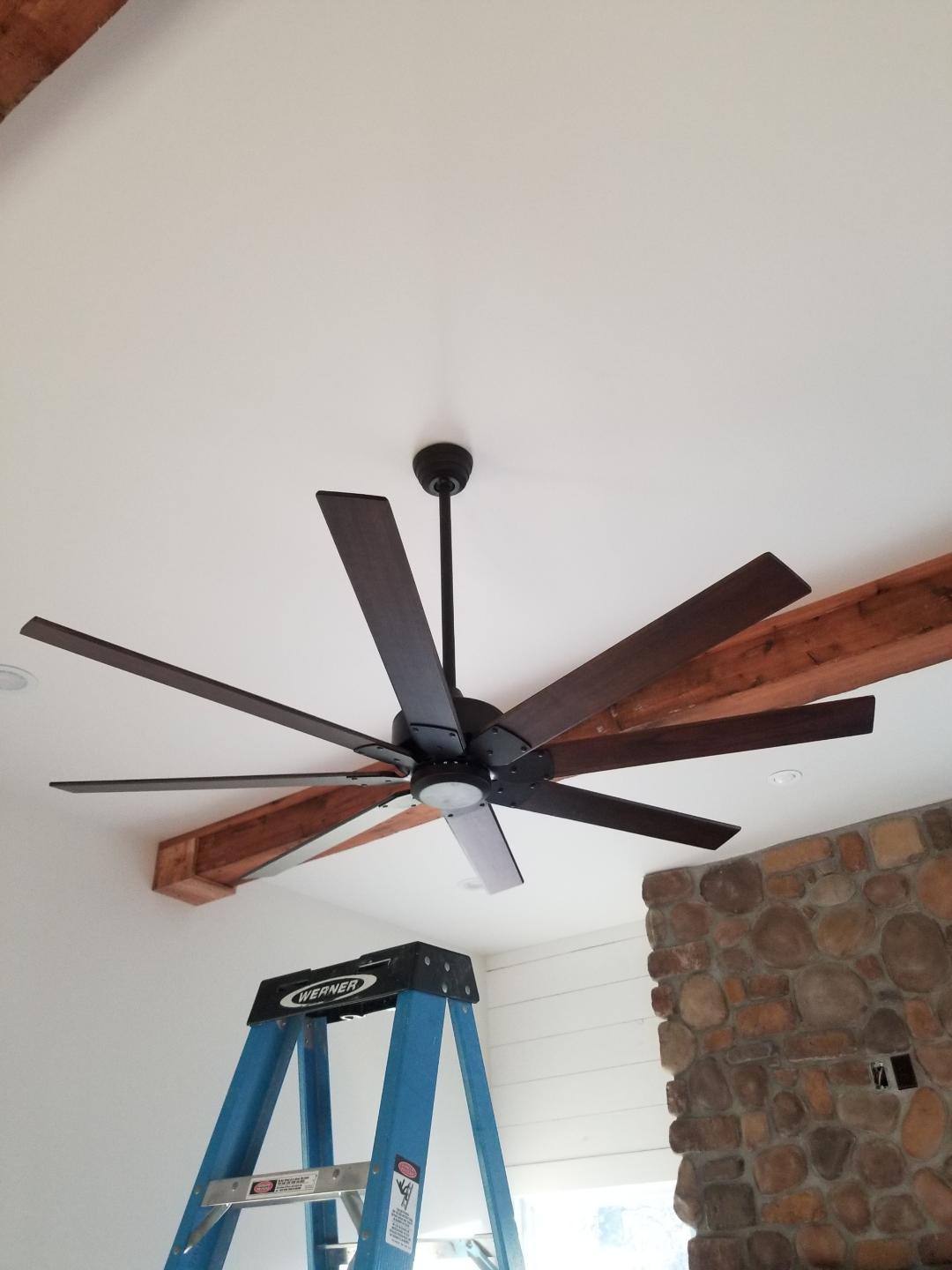
Here is the single most important thing about ceiling fans, and the thing that turns a simple job into a slightly bigger one: a ceiling fan cannot hang from a standard light fixture box. Fans move and create vibration and load that a standard box is not rated to hold, and a fan mounted on the wrong box can eventually work loose, which is exactly as bad as it sounds for something spinning over your bed.
A ceiling fan requires a fan-rated box, one specifically built and braced to carry the weight and movement. If you are putting a fan where only a light used to be, the box almost always has to be replaced with a fan-rated one. That is extra work, especially if there is no easy attic access above the spot, but it is not optional. It is the difference between a fan that is safe and one that is not.
Adding a fixture where there wasn’t one
Putting a light or fan somewhere that has no existing box or wiring is the most involved version. It means running a new circuit or branching off an existing one, adding a box, and getting power to the switch. The cost depends heavily on access, the same way recessed lighting does. A spot with attic access above it is far easier than a ground-floor ceiling under a finished second story, where the wiring has to be fished through.
This is also where the panel can come up. Adding fixtures rarely strains a panel by itself, but if it is part of a larger project, the overall load gets considered as part of the job.
When to call rather than DIY
Plenty of homeowners swap a simple fixture themselves. Where it is worth calling a pro: any ceiling fan installation where the box needs to be changed, any new fixture location that needs wiring, anything on a high or vaulted ceiling that requires getting up safely, and any time you open up an old fixture and find wiring that does not look right, scorching, brittle insulation, or a box packed with connections you do not recognize.
That last one matters more in older homes than people expect. A simple fixture swap is sometimes how a homeowner first discovers an aluminum wiring or aging-connection issue that was hiding behind the cover plate.
Epic Electric installs ceiling fans and light fixtures across Bella Vista, Bentonville, Rogers, and the surrounding Northwest Arkansas area, from a single quick swap to a new fixture that needs wiring. Same-day service, upfront pricing, licensed and insured. Call (479) 440-3742.