Landscape Lights Not Working? What to Check Before Calling
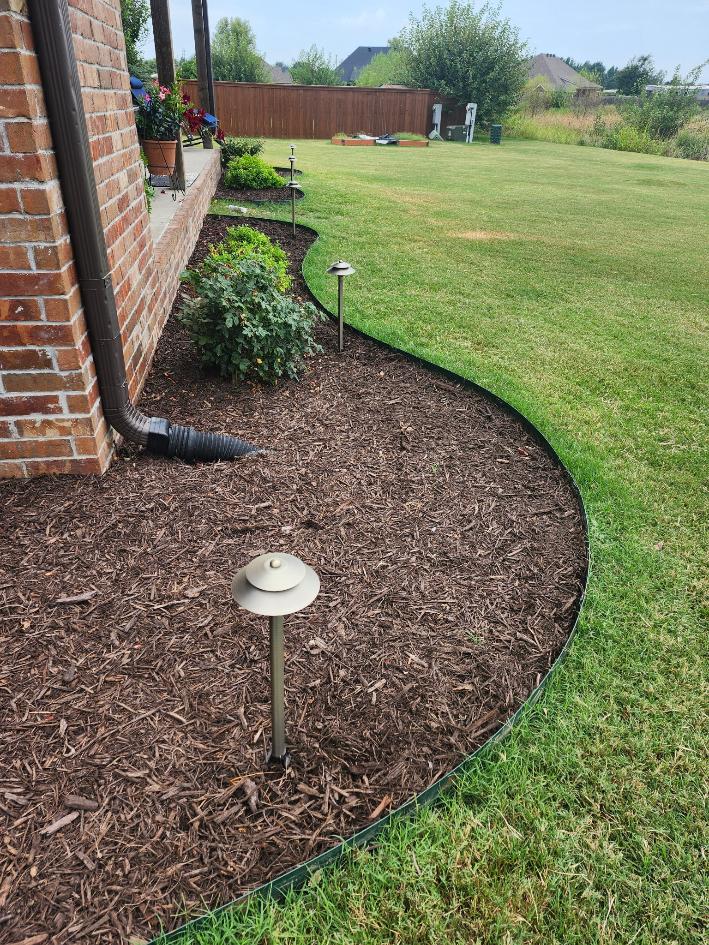
If your landscape lights will not turn on, the cause may be a control setting, an interrupted power supply, or a problem with a fixture or its wiring. Start by noting whether every light is dark or only part of the yard is affected. That pattern helps an electrician decide where to begin.
Do not open electrical enclosures, dig up cables, or repeatedly reset a device that trips. Failed landscape lights are inconvenient, but a careful description can help you get the right repair without guessing at replacement parts.
Are all your landscape lights out, or just one?
For a low-voltage system, a complete outage can involve the power source, transformer, timer, or photocell. One dark fixture may involve a replaceable lamp, the fixture itself, or its connection. A group of dim or dark fixtures can point toward a shared wiring issue.
Kichler’s troubleshooting guide distinguishes whole-system, partial-system, and individual-fixture problems. Its electrical measurements and wiring procedures are work for a qualified professional, not a homeowner checklist. Solar fixtures use a different power arrangement, so identify the system before applying advice intended for wired landscape lights.
Check the schedule before assuming a fixture failed
If the equipment and surrounding area are dry and undamaged, review the normal user controls described in your owner’s manual. Confirm the displayed time, operating mode, and lighting schedule. A timer set for a later hour may explain why the yard is dark when you expect illumination.
Some smart systems have separate schedules and zone controls, as illustrated in the Kichler Connects quick-start guide.
Use the manual for your exact controller. Avoid changing multiple settings at once, and record the original schedule before making an ordinary user adjustment. If your landscape lights still fail to operate at their scheduled time, describe that result when requesting service.
What if the problem started after rain?
Tell the electrician whether the outage followed rain, irrigation, or a storm. Timing is a clue, not proof that a particular fixture has leaked. Stay away from wet electrical equipment and do not reach into a flooded planting bed to inspect wiring.
The Electrical Safety Foundation’s outdoor safety guide explains that ground-fault circuit interrupters help protect against electric shock by detecting current leakage. A tripped GFCI deserves attention; bypassing it is not a repair. If protection will not reset or trips again, leave the affected equipment off and arrange professional evaluation.
Keep landscape lights off if you notice damaged wiring, scorching, a burning smell, or sparking. For an active fire, move away and call 911. Do not use an extension cord from another outlet to work around a suspected electrical fault.
Prepare a useful service description
You can help the service visit without handling electrical parts. From a safe location in daylight, identify the affected area and note any obvious damage. Mention recent digging, edging, planting, or construction, even if you are unsure it is related.
Before calling about landscape lights, gather these details if readily available:
- The controller or transformer brand and model from your records.
- Which areas still illuminate and which remain dark.
- When you first noticed the change and whether it happens consistently.
- Any recent changes to the schedule or added fixtures.
- Access considerations, including a locked gate or pets in the yard.
A simple yard sketch can make a phone conversation clearer. Label the driveway, front walk, and planting beds so everyone knows which landscape lights you mean. Photos taken from a safe position can also help document the symptoms without disturbing the installation.
Repair the cause before replacing the whole system
Ask whether the proposed work addresses a single component, a wiring problem, or a broader installation issue. Replacing every fixture is not automatically necessary just because several landscape lights stopped working together.
Request a clear explanation of the diagnosis and the proposed scope. If replacement is recommended, discuss parts availability, compatibility with the existing equipment, and the condition of the remaining system. Ask how operation and the lighting schedule will be checked after the work is complete.
Get help with landscape lights in Northwest Arkansas
Epic Electric offers indoor and outdoor lighting services, including landscape, pathway, and security lighting, throughout Northwest Arkansas. Homeowners in Bentonville, Rogers, Springdale, and Fayetteville can call (479) 974-8536 to discuss landscape lights that are not working and request service. Share the outage pattern and any safety concerns so the team can help plan the next step.