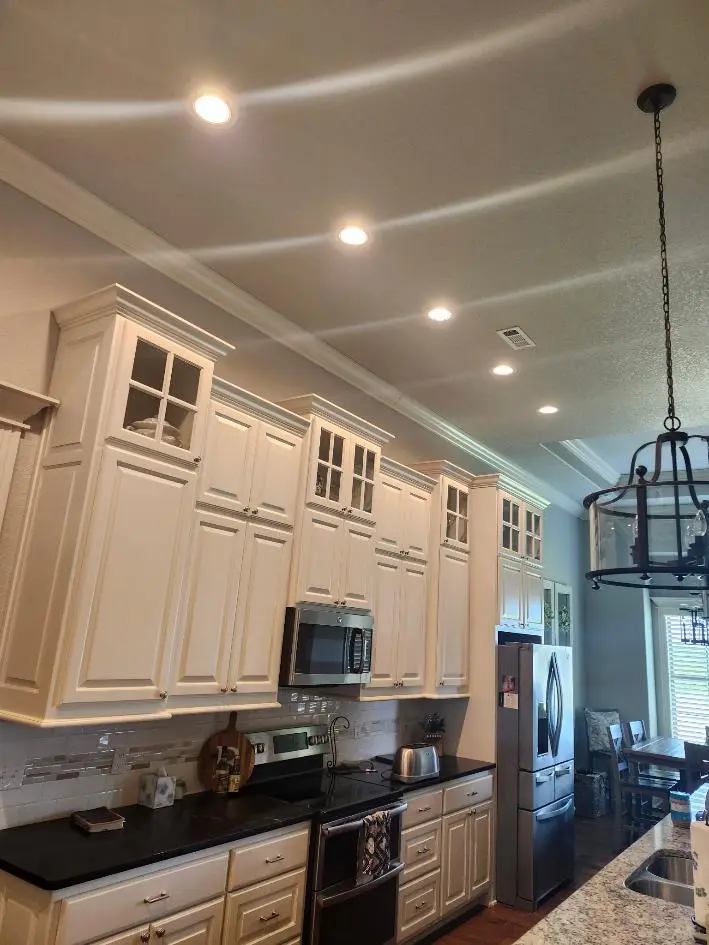
Why Are My LED Lights Flickering?
Flickering lights can come from an incompatible LED bulb and dimmer, a failing bulb, or a problem in the fixture, wiring, or electrical supply. The pattern helps an electrician narrow the possibilities, but it cannot confirm that your home is safe. If the flicker is new, keeps returning, or affects several rooms, arrange an electrical inspection.
For homeowners, the useful first question is simple: does one light flicker, one group flicker, or does the problem appear throughout the house? Write down what you observe without opening fixtures, switches, or your electrical panel.
When flickering lights need prompt attention
Stop using the affected light and call a qualified electrician if you notice buzzing or crackling, a burning odor, discoloration, unusual heat, or repeated breaker trips. Do not touch a suspect switch or outlet to test its temperature. If there is smoke, fire, or active sparking, leave the area and call 911 from a safe place.
The Electrical Safety Foundation’s electrical safety guidance identifies unexplained flickering or dimming, buzzing, warm switches or outlets, and burning smells as reasons to have an electrician inspect the system. Flickering lights without those additional symptoms still deserve attention if the cause is unclear.
What the pattern can tell you
One bulb or fixture flickers
If flickering lights are limited to one fixture, the bulb, its electronic components, the socket, or the fixture’s connections may be involved. A bulb that worked elsewhere does not rule out a fixture problem. Likewise, a light that temporarily settles down has not necessarily been repaired.
If there are no warning signs and the fixture is safely accessible, you can check the bulb packaging and fixture instructions. Any bulb replacement should follow those instructions with power off and the bulb cool. Leave damaged sockets, integrated LED units, high ceilings, and any wiring work to a professional.
The light flickers mainly when dimmed
Flickering lights at a low dimmer setting can indicate a mismatch between the lamp and the control. An LED marked “dimmable” is not automatically compatible with every dimmer. The exact bulb and dimmer models matter.
Lutron’s LED dimmer troubleshooting guidance explains that some LEDs cannot dim as low as the control allows. Its advice includes checking compatibility and, for applicable models, adjusting the low-end setting according to the manufacturer’s instructions. That guidance is model-specific; it is not permission to open a switch box or change wiring.
If flickering lights began after a bulb replacement, keep the new bulb’s model number and packaging for the electrician. Avoid buying several replacement dimmers by guesswork.
Several rooms change brightness together
When flickering lights affect multiple rooms, the issue may extend beyond a single fixture. Note whether an appliance starts at the same moment, whether the lights only dim or also brighten unusually, and whether neighbors notice a similar problem. Do not repeatedly start appliances to reproduce the symptom.
Widespread or dramatic brightness changes call for prompt professional evaluation. Contact your electricity provider as well if the problem appears to involve the incoming supply or nearby homes. Never approach a damaged service wire or open a meter enclosure.
What to record before your service visit
A short observation list helps make the visit productive. For flickering lights, record:
- Which rooms and fixtures are affected, and when the problem started.
- Whether it occurs at full brightness, only while dimmed, or at random.
- Any recent bulb, dimmer, fixture, or appliance changes.
- Any sounds, smells, visible damage, or breaker trips.
- Bulb and dimmer model information already available from packaging or receipts.
A video taken from a safe location may help describe an intermittent issue. Do not remove covers, reach into sockets, tighten electrical connections, or reset a breaker repeatedly. Diagnosis can require testing that should be performed by a qualified electrician.
Do flickering lights mean you need new lighting?
Not necessarily. Flickering lights alone do not establish that every fixture needs replacement or that the electrical panel needs an upgrade. The right repair depends on what testing finds. Ask the electrician to explain the identified cause, the proposed work, and whether the estimate includes replacement parts.
If the solution involves replacing a fixture or updating controls, explore Epic Electric’s indoor and outdoor lighting installation services. Choosing compatible equipment at the planning stage can help avoid dimming frustrations later.
Common questions about flickering lights
Can a new LED bulb still be the cause?
Yes. A new bulb may be incompatible with the existing dimmer, unsuitable for the fixture, or defective. Check the manufacturer’s specifications rather than assuming that a new product rules out a lighting issue.
Should I ignore a flicker that stops on its own?
No. Intermittent flickering lights can be difficult to reproduce during a visit. Keep a record of the pattern and arrange service if it returns or remains unexplained. Warning signs such as odor or crackling require prompt attention even if the light later looks normal.
Get lighting help in Northwest Arkansas
Epic Electric serves homeowners across Northwest Arkansas, including Bentonville, Rogers, Springdale, and Fayetteville. If flickering lights are disrupting your home, call (479) 802-4089 or request service online. Tell the team which lights are affected and any warning signs so they can understand the issue before the visit.