Is a Home EV Charger Installation Worth It in Rogers, or Should I Just Use Public Chargers?
A home EV charger is worth installing in Rogers if you charge more than once or twice a week, since a Level 2 charger cuts charging time from a full day on a regular outlet down to a few hours overnight, and it skips the trip to a public charger that may already be in use when you actually need it.
More EVs are showing up in driveways across Rogers every year, and a lot of new owners start out just fine using the charging cable that came with the car, plugged into a regular household outlet. That works for a while, especially if you drive less than most people. But once the daily commute adds up, or the car sits at 20 percent more mornings than you’d like, the math starts to change. Public charging in Rogers has grown too, but it is still concentrated around a handful of retail lots and isn’t always free when you pull in. Our EV charger installation page covers what a home Level 2 setup actually involves, from the equipment itself to the electrical work behind it.
How much faster is a home charger really?
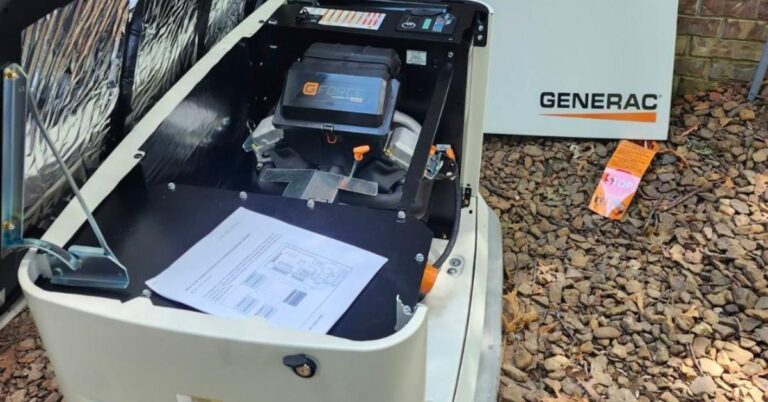
A standard 120V household outlet adds roughly 3 to 5 miles of range per hour, which is fine overnight if you barely used the car that day, but it won’t fully recharge a depleted battery by morning. A 240V Level 2 charger, the kind installed by an electrician, adds 20 to 40 miles of range per hour depending on the vehicle, meaning most EVs go from empty to full overnight without anyone thinking about it. That difference is the whole argument for a home charger. It’s not about charging faster than a public fast charger, it’s about never needing to plan around charging at all.
What does a home EV charger installation actually involve?
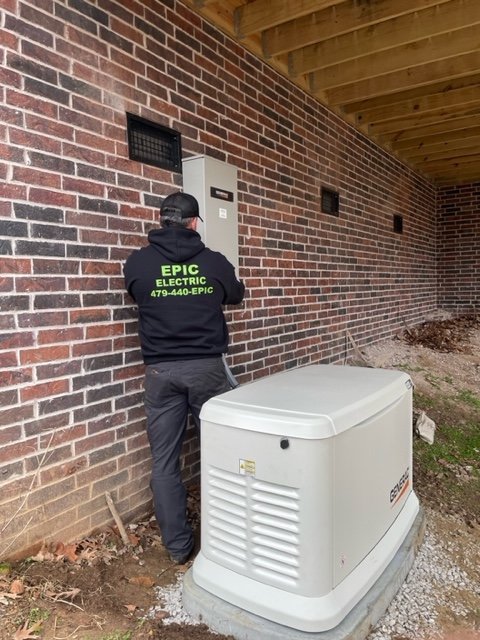
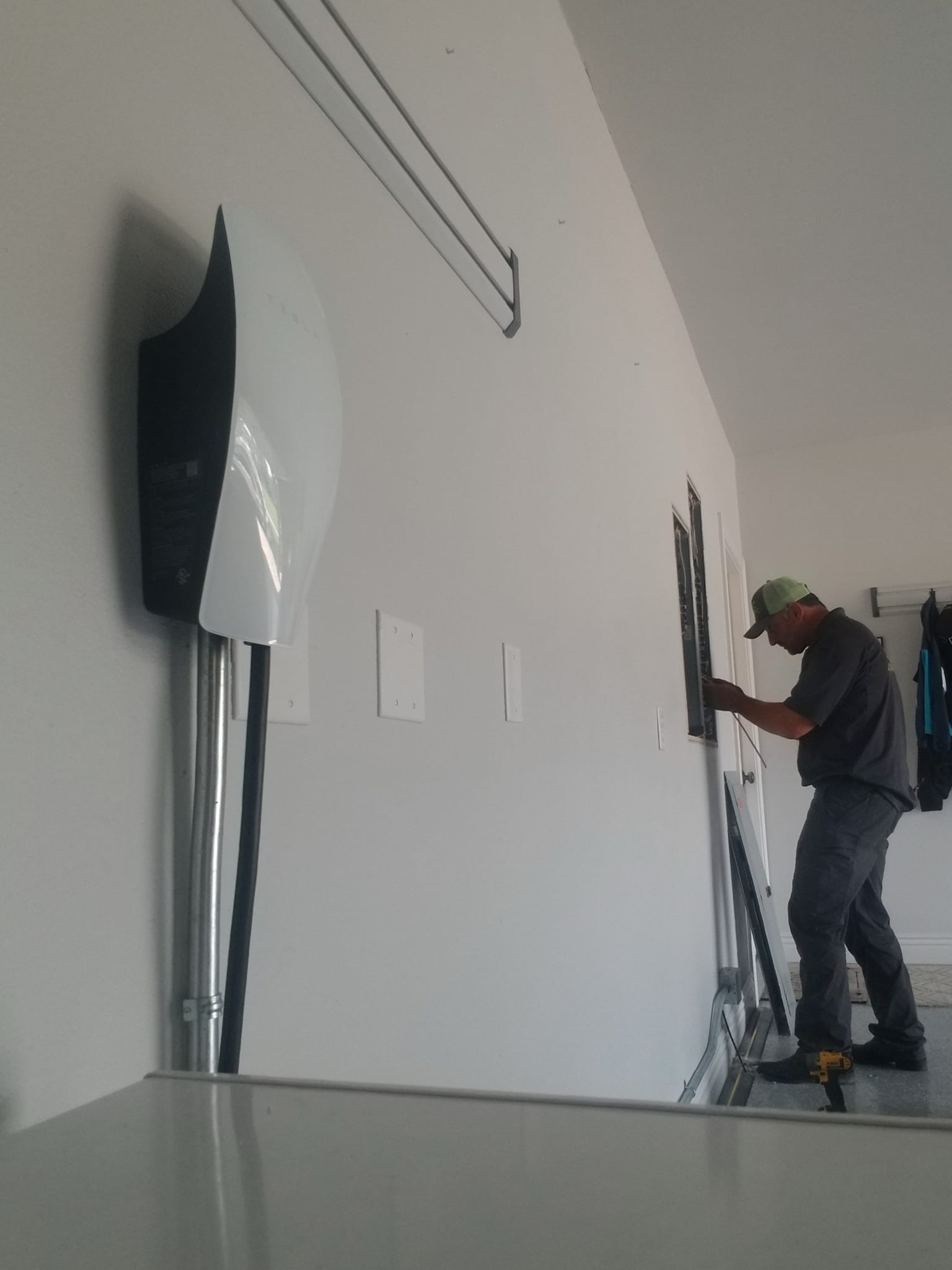
At minimum, it means running a dedicated 240V circuit from your panel to wherever the charger will sit, usually the garage or a spot near where you park. If your panel has room and capacity, that’s a straightforward job done in a few hours. If it doesn’t, and a lot of homes in Rogers built before EVs were common don’t, the panel itself may need attention first. This is where a certified electrician specializing in EV charger installation earns their fee: making sure the circuit is sized correctly and the panel can actually support it, rather than just bolting a charger to the wall and hoping for the best.
Are public chargers in Rogers reliable enough to skip a home charger?
They’ve gotten better, but “reliable” and “convenient” aren’t the same thing. A public charger works fine for a road trip or an emergency top-off, but building your daily routine around driving somewhere, waiting, and driving back is a different kind of commitment than plugging in at home before bed. Cold snaps and high-demand evenings are also when public chargers are most likely to have a line or a unit down for maintenance, which is exactly when you don’t want to be searching for a backup plan. We hear this from EV owners all over Rogers, especially anyone who moved here from a bigger metro area with a denser fast-charging network. Northwest Arkansas is catching up, but it isn’t there yet, and a home charger takes that whole question off the table.
What does a home charger cost compared to a year of public charging?
A home Level 2 charger and installation is a one-time cost, typically paid back within a year or two compared to what most drivers spend at public fast chargers, which almost always charge a premium over home electricity rates. After that, charging at home is close to the cost of running any other major appliance. It’s also worth checking your electricity provider for any EV charging rate or rebate program, since several utilities in Northwest Arkansas offer one and it can shorten the payback period further.
Is my panel able to handle a home charger?
The honest answer is that you won’t know for certain until someone opens the panel and checks your home’s actual amperage and existing load. Homes in Rogers and Fayetteville built in the last decade usually have 200-amp service with room to spare. Older homes, or ones that have added a lot of electric appliances over the years, sometimes need a panel upgrade before a charger can be added safely. Either way, that’s a fifteen-minute check, not a guessing game, and it’s the first thing worth confirming before you buy a charger and find out it doesn’t fit your setup.
If a panel upgrade does turn out to be needed, it’s usually done in the same visit as the charger install rather than as a separate trip, so it rarely turns into the multi-week delay people worry about.
Does a home charger actually change day-to-day life, or is that overselling it?
This is the part that’s easy to underestimate until you’ve lived with it. Right now, if you drive an EV, some part of your week probably involves thinking about charging: watching the percentage, planning a stop, remembering to top off before a longer trip. A home charger removes that mental overhead almost entirely. You plug in when you get home the same way you’d plug in your phone, and the car is full by morning, every morning, without exception. That’s a real quality-of-life change, not just a cost comparison, and it’s usually what tips people from “we should look into this eventually” to actually scheduling the install.
Frequently Asked Questions
How much does it cost to install a home EV charger in Rogers, AR? It depends on how far the charger location is from your panel and whether your panel has enough capacity already, but most installations are a single day’s work once a electrician has looked at your setup.
Do I need a permit to install a Level 2 EV charger at home? Yes, most Arkansas municipalities require a permit for a new dedicated circuit, and a licensed, insured electrician handles that as part of the installation.
Can my existing electrical panel handle an EV charger? It depends on your panel’s amperage and how many other high-draw circuits it already carries. Panels under 150 amps or already running close to capacity often need an upgrade first.
Is a 120V outlet enough to charge my EV overnight? For light daily driving, sometimes. For most commutes, a 120V outlet adds range too slowly to reliably recharge overnight, which is why most EV owners move to a 240V Level 2 charger within the first year. You can reach out and tell us your daily driving distance, and we’ll tell you honestly whether 120V would even work for you.
If you’re deciding whether a home charger makes sense for how you actually drive, call us at (479) 440-3742 and we’ll look at your panel and give you a straight answer, not a sales pitch.