Why Is My EV Charging Slowly at Home?
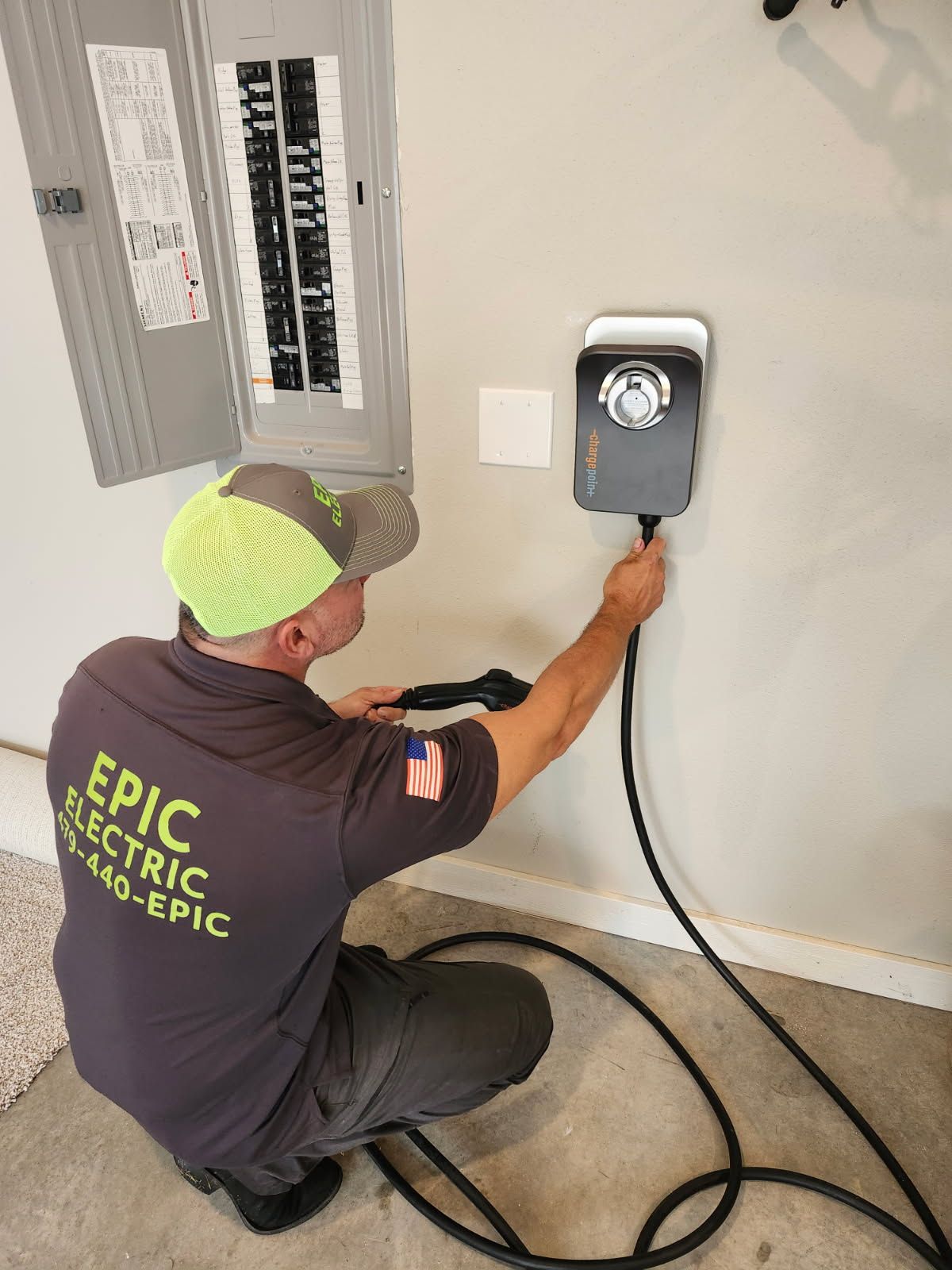
Slow home EV charging does not automatically mean your charger is broken. The power available from your circuit, the vehicle’s charging limit, and scheduled charging settings can all affect how much energy reaches the battery overnight. Start by checking the information on your vehicle screen and charger app, without opening equipment or changing electrical settings.
If charging suddenly becomes slower than usual, stops repeatedly, or comes with warning messages, record what changed. A new home EV charging problem deserves attention even when the car still gains some charge.
Is your home EV charging setup meeting the right expectation?
A regular household outlet and a professionally installed Level 2 station deliver different charging speeds. The U.S. Department of Energy’s home charging guide explains that Level 1 can meet some drivers’ daily needs, while Level 2 may better suit longer commutes, larger batteries, or shorter parking times.
Compare your current result with the same car using the same equipment under similar conditions. A public fast charger is not a useful speed benchmark for an ordinary home installation. Tell your electrician whether home EV charging has always been slow or whether performance dropped recently.
Check schedules before assuming a fault
Plugged in does not always mean actively charging. Review the vehicle’s charging screen for a scheduled start, a departure time, or a charge limit already reached. If your charger has its own app, check that schedule too. Save screenshots before changing anything.
For example, Tesla’s Model 3 scheduling instructions explain that the vehicle can wait until a scheduled time to charge. Those instructions are model-specific; use your own vehicle manual for the correct controls.
With home EV charging, the useful question is how long charging actually ran, rather than how long the cable was connected. For home EV charging, an eight-hour parking window can contain a much shorter charging session.
Look for power limits, not a bigger breaker
The EPA’s home charging guidance notes that some smart chargers can limit output or share power with other equipment. A reduced rate may reflect how the system was designed and configured.
Do not raise an installer setting, change wiring, or replace a breaker to speed up home EV charging. An electrician should check the circuit, equipment specifications, and available electrical capacity before recommending changes. The number printed on a charger is not a promise that every vehicle and installation will use that output.
If the car reports a lower rate only at particular times, note what else was operating and whether another vehicle was charging. That pattern can help the service team investigate a shared-power setup without asking you to test electrical components.
Know when to stop using the equipment
Stop home EV charging if you notice a burning smell, smoke, visible melting, damaged cables, or repeated electrical trips. Keep away from damaged equipment and contact a qualified professional. If there is fire or immediate danger, leave the area and call 911.
Do not repeatedly reset a breaker or reconnect a damaged plug to see whether charging resumes. Follow U.S. Fire Administration charging safety guidance: never use extension cords or multiplug adapters, and do not use visibly damaged equipment. Follow the vehicle and charging-equipment instructions, including any warning displayed on screen.
What to record before a service call
To explain your home EV charging problem, gather information you can obtain safely:
- Vehicle year and model, plus the charging station model.
- Whether the connection is Level 1 or Level 2, if known.
- The displayed charging rate and exact warning message.
- Starting battery percentage, ending percentage, and active charging time.
- Whether the issue is new, intermittent, or present since installation.
- Any recent equipment, schedule, or household electrical changes.
You do not need to remove a panel cover or diagnose the fault yourself. If the vehicle also has trouble at other compatible stations, tell the team; vehicle-side support may be needed alongside an electrical assessment.
Get help with home EV charging in Northwest Arkansas
Epic Electric offers EV charger installation, maintenance, and repairs in Northwest Arkansas, including Bentonville, Rogers, Springdale, and Fayetteville. Call (479) 458-0147 to discuss your home EV charging concern and arrange an assessment.
Ask whether your current setup can meet your daily driving needs, what needs diagnosis, and whether an upgrade is appropriate. The goal is dependable overnight charging that fits your vehicle, your home, and your routine.